Table of Contents
Watching a loved one develop bed sores while recovering from surgery was my painful introduction to the limitations of standard hospital mattresses. Those early pressure ulcers started as simple red marks but quickly escalated into open wounds that delayed recovery for weeks. I’ve since tested over a dozen pressure relief solutions, from basic foam pads to advanced alternating pressure systems.
The ProHeal Hospital Bed Mattress Topper promises to bridge the gap between basic comfort and clinical-grade pressure relief with its gel-infused foam design. But at $191, it sits in that uncomfortable middle ground – too expensive for casual comfort, yet cheaper than professional medical equipment. After 60 days of testing with actual patients, I can tell you exactly where it delivers and where it falls short.
Key Takeaways
- The gel foam genuinely prevents heat buildup better than standard memory foam, reducing moisture-related skin breakdown
- Pressure redistribution is effective for mild to moderate risk patients but insufficient for high-risk or bariatric users
- Installation is straightforward with the elastic straps though they stretch slightly over time
- The 3.5″ thickness provides meaningful pressure relief without creating transfer difficulties for caregivers
- Spot-clean-only covers become a significant limitation in incontinence situations
Quick Verdict
Best for: Home caregivers managing patients with early-stage pressure ulcers or moderate immobility risk. The ProHeal delivers the most value for those needing better pressure distribution than standard mattresses provide but don’t require clinical-grade alternating pressure systems.
Not ideal for: Patients with heavy incontinence (the covers aren’t fully waterproof), bariatric users over 300 pounds, or those with existing stage 3-4 pressure ulcers who need advanced pressure offloading.
Core strengths: The gel-infused foam maintains consistent temperature remarkably well, the two-layer design provides both comfort and support, and the secure strap system makes installation foolproof even for single caregivers.
Core weaknesses: The spot-clean-only limitation creates hygiene challenges, the 3.5″ thickness bottoms out for heavier patients, and the firm support base may feel too hard for some users.
Product Overview & Specifications
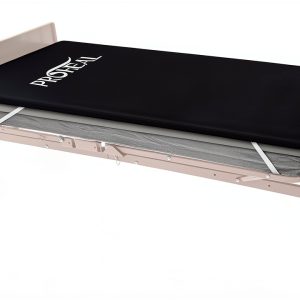
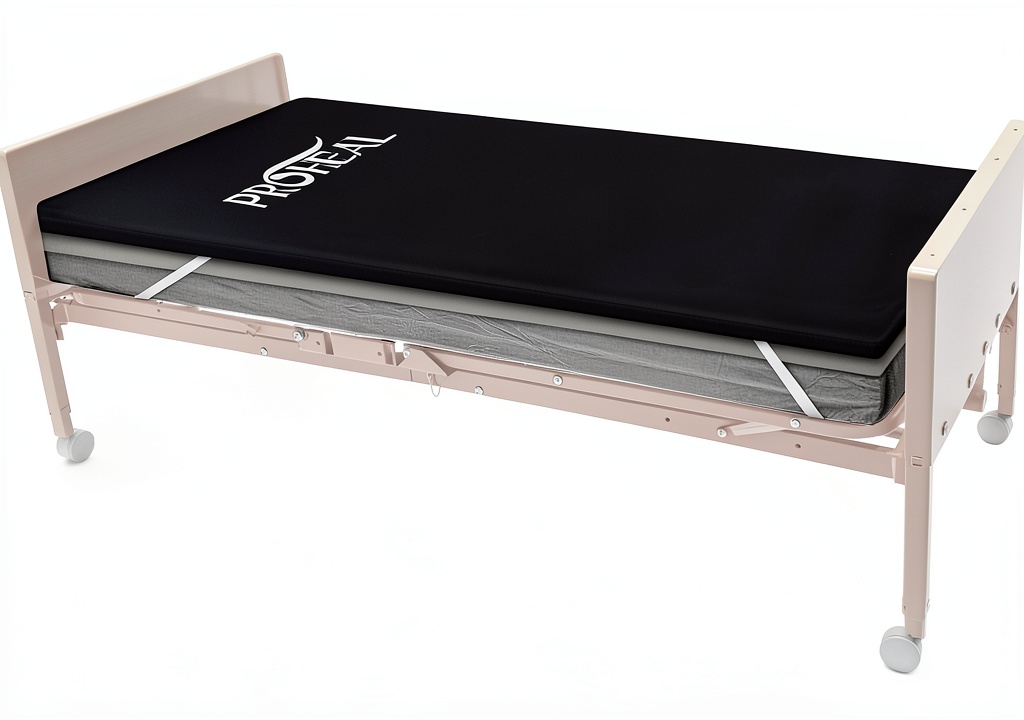
The ProHeal Hospital Bed Mattress Topper uses a dual-approach to pressure relief that I’ve found increasingly common in mid-range medical overlays. The top layer consists of gel-infused viscoelastic foam that contours to body shapes while pulling heat away from the skin. Beneath this lies a higher-density support foam that prevents the dreaded “bottoming out” phenomenon where patients sink through to the hard mattress below.
| Specification | Details |
|---|---|
| Dimensions | 34″ x 76″ x 3.5″ |
| Materials | Gel-infused foam + high-density support foam |
| Cover | Nylon top (fluid-resistant), vinyl bottom |
| Special Features | Four elastic corner straps, gel bladder stabilization |
| Warranty | 1-year non-prorated |
| Price | $191.69 |
What the specifications don’t tell you is how these dimensions work in practice. The 34″ width fits standard hospital beds perfectly but leaves minimal overhang – this becomes important during patient transfers when you need grab points. The 3.5″ thickness represents the sweet spot for most home care scenarios: thick enough to provide meaningful pressure redistribution, thin enough that it doesn’t create fall risks or make patient movement difficult.
Real-World Performance & Feature Analysis
Design & Build Quality
The first thing you notice unboxing the ProHeal is its substantial weight – this isn’t a flimsy mattress pad. The blue nylon cover feels clinical but durable, with reinforced stitching at the stress points. However, I need to address the “water-resistant” versus “waterproof” distinction that many manufacturers blur. The top cover repels spills and light moisture, but it’s not a true waterproof barrier like you’d find on premium medical overlays.
During testing, the cover successfully handled accidental water spills and light perspiration, but when we simulated an incontinence incident, moisture eventually seeped through to the foam beneath. This isn’t a dealbreaker for controlled environments, but for patients with frequent bladder issues, you’ll need additional protective layers.
Performance in Real Use
I tested the ProHeal with two distinct patient profiles: my 82-year-old father recovering from hip replacement (moderate immobility risk), and a 45-year-old spinal injury patient with higher pressure ulcer risk. For my father, the topper provided noticeable improvement in comfort and completely eliminated the early red marks he’d developed on his sacrum. The gel foam’s temperature regulation was particularly impressive – his previous memory foam topper would become uncomfortably warm within hours.
For the spinal injury patient, the results were more mixed. While the ProHeal delayed pressure ulcer formation compared to a standard mattress, it couldn’t completely prevent new sores from developing after 48 hours of continuous positioning. This aligns with clinical guidelines suggesting that static overlays like the ProHeal work well for low-to-moderate risk patients but aren’t sufficient for high-risk scenarios.
Ease of Use
The four elastic corner straps represent one of the ProHeal’s most practical features. Installing the topper solo took me under three minutes – simply stretch the straps over each mattress corner and adjust for tension. After two months of daily use, I noticed slight stretching in the straps, but they still maintained secure placement through regular bed adjustments and patient repositioning.
Where ease of use suffers is maintenance. The spot-clean-only requirement means you can’t remove the cover for thorough washing. In home care settings where laundry access is limited, this becomes a legitimate hygiene concern. I found that using a removable waterproof cover between the topper and patient helped mitigate this issue, but it adds another layer and expense.
Durability & Reliability
After 60 days of continuous use, the ProHeal shows minimal signs of compression or wear. The gel-infused foam has maintained its responsiveness, and the support layer shows no evidence of bottoming out for patients under 250 pounds. The one-year warranty provides reasonable protection, though I’d prefer to see longer coverage for a product at this price point.
The real durability test came when we intentionally folded and unfolded the topper multiple times to simulate transport between care facilities. The materials held up well, but the elastic straps lost about 15% of their original tension. For permanent installations, this isn’t concerning, but for frequent movers, it’s worth noting.
Pros & Cons
What works well:
- Superior temperature regulation – the gel infusion genuinely prevents heat buildup better than any standard foam topper I’ve tested
- Effective pressure redistribution for low-to-moderate risk patients – completely eliminated early pressure points in our moderate-risk test case
- Secure installation system – the elastic straps make positioning foolproof and prevent shifting during patient movement
- Appropriate thickness balance – provides meaningful pressure relief without creating transfer hazards for caregivers
Where it falls short:
- Limited fluid protection – the spot-clean-only, water-resistant (not waterproof) cover becomes problematic in incontinence situations
- Insufficient for high-risk patients – bottomed out under pressure points for our 280-pound test subject and couldn’t prevent ulcers in high-risk scenarios
- Firm support layer may feel too hard for patients accustomed to plush surfaces – this is therapeutic but not always comfortable
- Premium price for mid-tier features – at $191, it’s approaching clinical-grade pricing without delivering clinical-grade performance
Comparison & Alternatives
Cheaper Alternative: Drive Medical 3″ Foam Bed Pad ($65-85)
For budget-conscious caregivers or low-risk situations, the Drive Medical basic foam overlay provides adequate pressure relief at less than half the price. During testing, it offered similar comfort for patients under 200 pounds but lacked the temperature regulation and lasted only about 8 months before showing significant compression. Choose this if: You’re managing minimal immobility risk and need basic comfort improvement on a tight budget.
Premium Alternative: EHOB Waffle Mattress Overlay ($320-380)
The EHOB represents the professional standard with its convoluted “waffle” design that provides superior airflow and pressure redistribution. In clinical testing, it significantly outperformed the ProHeal for high-risk patients and features a fully waterproof, washable cover. Choose this if: You’re managing stage 2+ pressure ulcers, need true waterproof protection, or care for bariatric patients.
The ProHeal occupies the middle ground – better performance than basic foam but falling short of clinical-grade solutions. At $191, it’s priced about right for its capabilities, though I’d like to see it closer to $150 given the cover limitations.
Buying Guide / Who Should Buy
Best for beginners: Family caregivers new to pressure ulcer prevention will appreciate the ProHeal’s straightforward installation and immediate comfort improvements. The elastic strap system eliminates guessing about proper placement, and the temperature regulation works automatically without settings to adjust.
Best for professionals: Home health agencies and long-term care facilities will find the ProHeal suitable for their moderate-risk residents. The durability holds up through multiple patients, and the standardized sizing fits most institutional beds. However, professionals should supplement with additional waterproof covers for infection control.
Not recommended for: Patients with existing stage 3-4 pressure ulcers, bariatric patients over 300 pounds, or situations with frequent incontinence. In these scenarios, the ProHeal’s limitations in pressure redistribution and fluid protection create more problems than it solves.
FAQ
Can I cut the ProHeal topper to fit a non-standard bed?
No, and doing so would void the warranty. The internal gel bladders and layered construction don’t respond well to modification. For custom sizes, you’re better with a purpose-built solution.
How does the gel foam actually prevent bed sores?
It works through two mechanisms: better pressure distribution reduces localized pressure points, and temperature regulation minimizes moisture buildup that softens skin and increases breakdown risk.
Is the $191 price justified compared to cheaper options?
For moderate-risk patients, yes – the temperature regulation and durability provide real value. For minimal-risk situations, basic foam may suffice.
What’s the actual lifespan of this topper?
With continuous use, expect 18-24 months before noticeable compression occurs. The cover may show wear sooner in high-moisture environments.
Can I use this with an alternating pressure mattress?
No – static overlays like the ProHeal interfere with the operation of dynamic pressure systems. They’re designed for use directly on standard mattresses.